


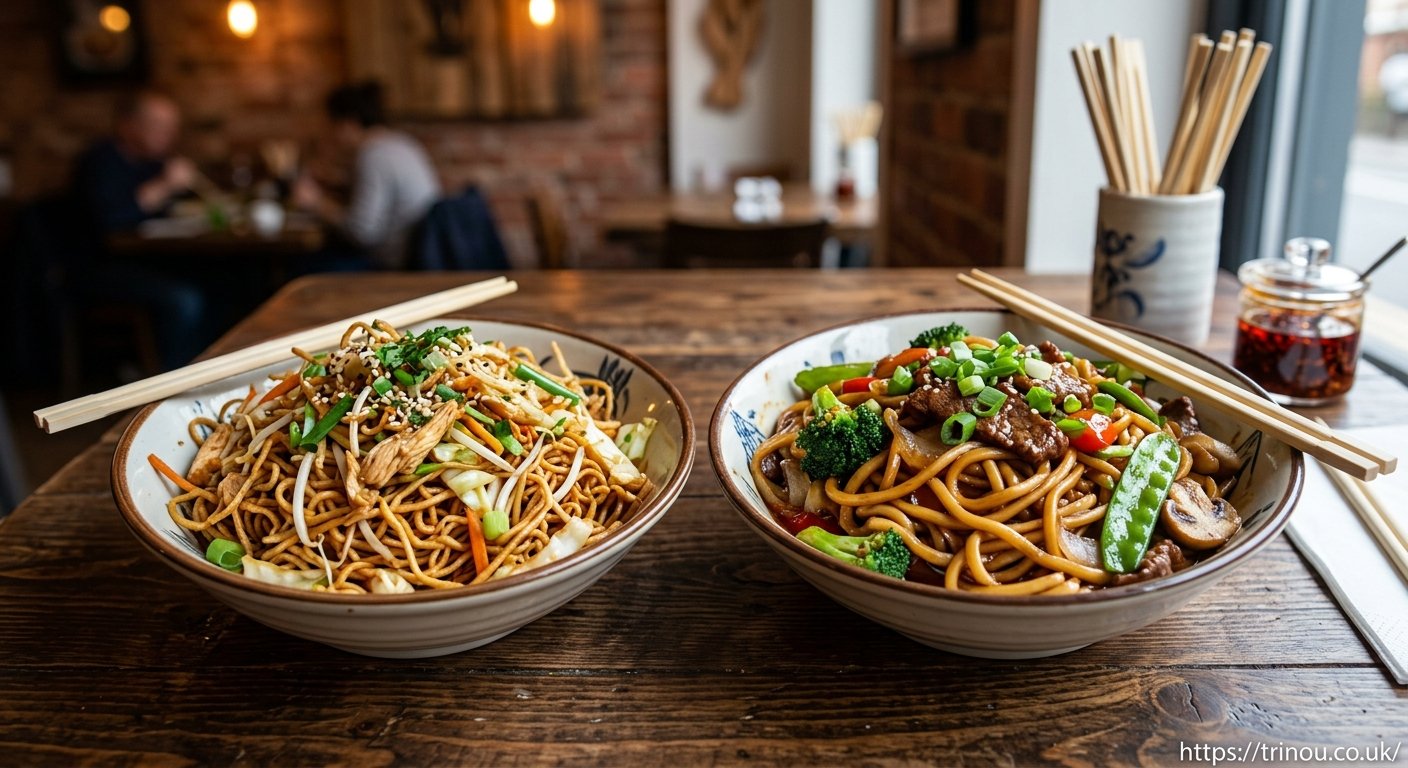
Chow Mein vs Lo Mein: What’s the Difference?
When comparing chow mein vs lo mein, the main difference comes down to how the noodles are prepared and finished. Both dishes commonly combine wheat or egg noodles with vegetables, meat, seafood, and savory sauces, but their cooking techniques create noticeably different results. Chow mein is generally associated with noodles that are stir-fried over high heat, while lo mein typically uses cooked noodles that are tossed with sauce and other ingredients. This gives chow mein a firmer or crispier character and lo mein a softer, more tender texture.
What Is Chow Mein?
Chow mein is a popular Chinese-style noodle dish in which noodles are typically stir-fried with vegetables, protein, and seasonings. The noodles are cooked and then exposed to high heat in a wok or pan, allowing them to develop a firmer texture and, depending on the preparation, lightly crisp edges. Common additions include cabbage, carrots, onions, bean sprouts, chicken, beef, shrimp, or tofu, although recipes vary widely between restaurants and regions.
The word chow mein is commonly associated with the idea of stir-fried noodles, and that cooking process is central to the dish’s identity. Rather than simply coating cooked noodles with sauce, the ingredients are brought together in a hot wok, where tossing and frying help combine the flavors. The result can range from relatively dry and lightly seasoned noodles to a more saucy version, so the exact appearance and taste of chow mein can differ significantly from one restaurant to another.
What Is Lo Mein?
Lo mein is a Chinese-style noodle dish made by tossing cooked noodles with sauce, vegetables, and protein rather than primarily frying the noodles until crisp. The noodles are usually soft and chewy, making them effective at carrying savory sauces throughout the dish. Common ingredients include cabbage, carrots, mushrooms, green onions, chicken, beef, shrimp, or tofu, although the exact combination depends on the recipe or restaurant.
Chow Mein vs Lo Mein: Cooking Method Compared
The cooking method is one of the clearest ways to understand chow mein vs lo mein. Chow mein is traditionally prepared by stir-frying the noodles with the other ingredients over relatively high heat. This process allows the noodles to interact directly with the hot wok, creating a firmer texture and, in some versions, crisp or lightly browned portions. The vegetables and protein are also cooked in the wok, so their flavors become integrated with the noodles during the frying process.
Lo mein follows a different approach. The noodles are generally boiled or otherwise cooked separately and then combined with sauce, vegetables, and protein, often by tossing everything together rather than extensively frying the noodles. Because the noodles spend less time directly frying in the wok, they usually remain soft and chewy. The sauce also plays a more prominent role, coating the noodles and creating the rich, savory consistency many people associate with lo mein.
Taste and Texture Differences
The taste and texture of chow mein and lo mein can feel quite different even when they contain similar vegetables, proteins, and seasonings. Chow mein usually has a firmer, more wok-fried character, with some preparations offering lightly crisp or browned noodles and a less coating-heavy sauce. Lo mein, by contrast, is generally softer and more tender, with sauce coating the noodles more thoroughly and creating a richer, smoother mouthfeel. These differences make chow mein appealing to people who enjoy a more fried and textured noodle dish, while lo mein often suits those who prefer soft noodles with a stronger saucy flavor.
Noodles, Sauces, and Ingredients
The noodles used in chow mein and lo mein can look similar, but their preparation and final texture often make them easy to distinguish. Chow mein noodles are commonly cooked before being stir-fried, while lo mein noodles are generally cooked and then tossed with the remaining ingredients. Both dishes can use wheat-based or egg noodles, and the exact noodle style can vary according to the regional recipe or restaurant. This means the noodle itself is not always enough to determine whether a dish is chow mein or lo mein.
Sauces and additional ingredients also contribute to the difference. Chow mein can use a relatively light amount of sauce so that the fried noodles retain their texture, while lo mein is often more heavily coated with a savory sauce. Vegetables such as cabbage, carrots, onions, mushrooms, and bean sprouts are common in both dishes, while chicken, beef, pork, shrimp, or tofu can provide the main protein. Because recipes vary, there is no single ingredient list that applies to every version of either dish.
Which One Should You Choose?
Choosing between chow mein and lo mein largely depends on the texture and eating experience you prefer. If you enjoy firmer, wok-fried noodles with a slightly crisp exterior and a more pronounced fried flavor, chow mein is often the better choice. If you prefer soft, chewy noodles generously coated in a savory sauce, lo mein may be more satisfying. Both can be customized with different vegetables and proteins, so personal taste is ultimately the deciding factor.
Chow Mein vs Lo Mein: Quick Comparison
A quick comparison of chow mein vs lo mein shows that both dishes share many ingredients but differ mainly in preparation and texture. Chow mein is typically associated with stir-fried noodles that can become firm or slightly crisp, while lo mein uses cooked noodles that are tossed with sauce and other ingredients. The contrast is especially noticeable when both dishes are served with similar vegetables and proteins, because the cooking technique changes the overall eating experience.
| Feature | Chow Mein | Lo Mein |
| Cooking style | Stir-fried | Tossed with sauce |
| Texture | Firmer or crispier | Softer and chewier |
| Sauce | Often lighter | Usually more coating |
| Main appeal | Wok-fried flavor | Saucy, tender noodles |
| Common additions | Vegetables and protein | Vegetables and protein |
Conclusion
Ultimately, the choice between chow mein vs lo mein comes down to preparation, texture, and personal preference. Chow mein generally offers a firmer, wok-fried noodle experience, while lo mein is known for softer noodles coated with savory sauce. Although recipes vary between restaurants and regions, understanding these basic differences makes it easier to choose the dish that best matches your taste.
FAQs
Is chow mein healthier than lo mein?
Neither is automatically healthier. The nutritional value depends on the amount of oil, sauce, noodles, vegetables, and protein used in the recipe.
Which is crispier, chow mein or lo mein?
Chow mein is generally firmer and crispier, especially when the noodles are stir-fried until browned. Lo mein is typically softer and chewier.
Do chow mein and lo mein use the same noodles?
They can use similar wheat or egg-based noodles, but preparation and regional traditions vary. The cooking method is often a more useful distinction than the noodle itself.
Which tastes better, chow mein or lo mein?
It depends on personal preference. Choose chow mein for a firmer, wok-fried texture or lo mein if you prefer soft noodles with a more prominent savory sauce.
